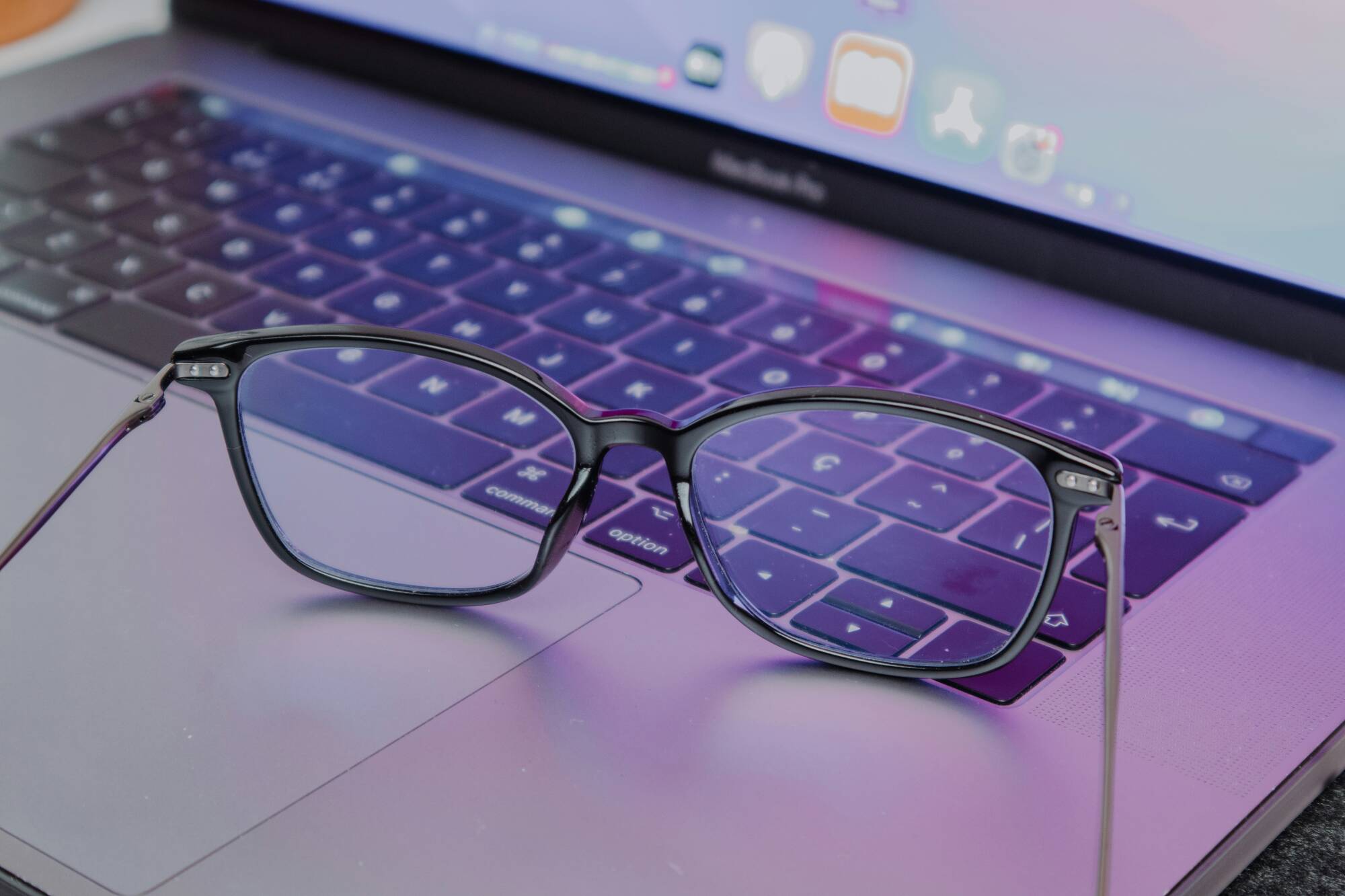
You’ve probably seen blue‑light glasses everywhere — influencers, ads, and wellness shops all promising they’ll protect your eyes and help you sleep better. But what’s real, what’s hype, and what does science actually say?
What Are Blue Light Glasses?
Blue light refers to short‑wavelength light in the visible spectrum that comes from sunlight and electronic screens like phones, tablets, and laptops. Special lenses are marketed as “blue‑light blocking” or “filtering” to reduce how much blue light enters your eyes.
Most of these glasses do filter some blue light, but the amount varies widely depending on the design — many clear‑tinted models block only about 5–20% of blue wavelengths. They aren’t blocking 100% of it, and few are tuned precisely to the wavelengths that affect sleep regulation.
Do They Improve Sleep or Maintain Circadian Rhythm?
Here’s where the science gets interesting:
Blue light can influence the circadian rhythm: exposure to light in the evening — especially blue wavelengths — signals your brain that it’s still daytime and suppresses melatonin, the hormone that helps you feel sleepy. This is a well‑accepted biological fact.
But blue‑light glasses’ real effects are mixed: many studies and expert reviews find no strong evidence that wearing these glasses clearly improves sleep outcomes or eye health for most people. Reviews have concluded blue‑light blocking lenses probably don’t reduce eye strain or meaningfully improve sleep quality in the general population.
Some smaller studies suggest specific amber‑tinted glasses worn in the evening might help increase melatonin and advance sleep timing in people with delayed sleep patterns. However, these are small and not conclusive for everyone.
In other words: blue light does play a role in circadian rhythms, but most consumer blue‑light glasses don’t block enough of it to have a clear, measurable effect on sleep for most people.
What Does Help Your Circadian Rhythm?
Instead of relying on glasses alone, experts recommend behavioural habits that are backed by stronger evidence:
Reduce overall light exposure in the evening, especially bright screens.
Dim room lighting and use “night mode” or warm colour settings on devices.
Keep a regular sleep schedule and avoid heavy screen use right before bed.
These strategies target the same biological mechanism (melatonin regulation) without depending on specific eyewear.
So… Are Blue‑Light Glasses Worth It?
They’re not a scam, but for most people they’re not a magic sleep solution either. If you find that wearing them in the evening makes your screen look more comfortable or signals to your brain that “nighttime is coming,” that’s a valid experiential benefit — even if the clinical evidence is limited.
They’re most likely to help when:
You use them consistently in the evening rather than all day.
You’re sensitive to light or have trouble falling asleep after screen use.
You choose glasses with stronger amber/colored filters that target melatonin‑suppressing wavelengths (rather than clear tints).
At minimum, if they help you wind down and feel ready for bed without negative effects, many people find them a useful part of their evening routine.
References
T. Yousef, No Evidence that Blue‑Light Blocking Glasses Help with Sleep — analysis on blue light and sleep research.
A trial of blue‑light blocking glasses in delayed sleep phase disorder — melatonin onset and sleep onset improvements.
Evening wear of blue‑blocking glasses for sleep and mood disorders: systematic review — circadian and sleep effects.
Evening blue‑light blocking glasses RCT in healthy adults — subjective vs objective sleep measures.
Will blue light‑blocking glasses improve my sleep? — evidence and lack of strong large‑scale trials.
Efficacy of blue‑light blocking glasses on circadian regulation mechanisms — role of ipRGCs and melatonin.