
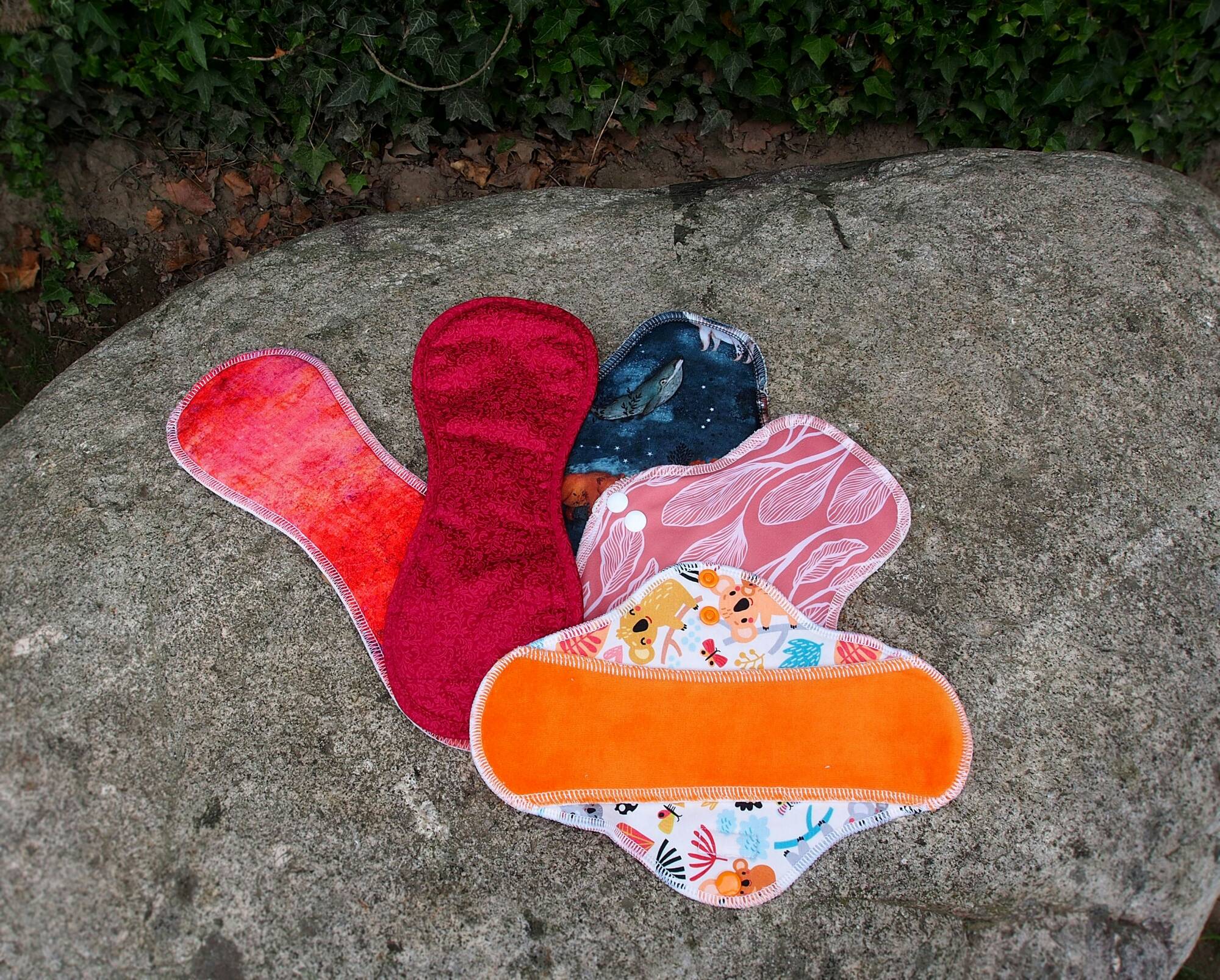
Welcome to a more sustainable (and often more comfortable) way to manage your period. If reusable period pads are new to you, you might be wondering why anyone would make the switch.
It’s a fair question. For decades, large brands have shaped the narrative around periods - promoting single-use products as the only option, while also encouraging a sense of secrecy and discomfort around menstrual blood. (There’s a reason those adverts always use blue liquid instead of the real thing.)
But times are changing. More people are exploring reusable options that are better for their bodies, their budgets, and the planet.
Reusable period pads are one of those options—and for many, they’re a game changer.
They’re soft, breathable, and free from the plasticky feel that disposable pads can have. They’re highly absorbent, easy to clean, and can be reused again and again—reducing waste and long-term cost.
So how exactly do they work?
What Are Reusable Period Pads Made Of?
Reusable pads are designed with multiple layers that work together to absorb menstrual fluid and prevent leaks. They’re shaped similarly to disposable pads and usually fasten around your underwear with poppers or snaps to keep them securely in place.
Here’s how each layer functions:
Top Layer
This is the part that sits against your skin. It’s typically made from soft, breathable materials like cotton, organic cotton, or bamboo. Its job is to draw moisture away from the surface, helping you feel dry and comfortable throughout the day.
Absorbent Core
At the centre of the pad are several layers of absorbent fabric. Materials such as bamboo, cotton, hemp, or microfiber are commonly used to capture and hold fluid, providing reliable protection against leaks.
Waterproof Backing
The bottom layer acts as a barrier, preventing any moisture from passing through to your clothes. This is usually made from a leak-resistant fabric such as PUL or TPU, offering added peace of mind.
How Often Should You Change Reusable Pads?
There’s no one-size-fits-all answer—it depends on your flow, the pad you’re using, and your personal preference.
As a general guide:
Light flow days: you may only need to change every 4–6 hours
Heavier days: you might prefer to change every few hours
Overnight: use a higher absorbency pad designed for longer wear
If you’re new to reusable pads, it can be helpful to try them at home first to understand what works best for your body and routine.
A quick tip: washing new pads a few times before first use can help maximise their absorbency.
How Absorbent Are Reusable Period Pads?
Reusable pads are designed to match—if not exceed—the performance of disposable products. They come in a range of absorbency levels to suit different needs:
Light
Ideal for spotting, very light days, or as backup protection alongside a menstrual cup or tampon.
Medium
Suitable for everyday use during a regular flow.
Heavy / Night / Postpartum
Designed for heavier bleeding, overnight use, or postpartum recovery. These pads are typically longer and more absorbent for extra coverage and security.
Why Consider Switching?
Many people choose reusable pads because they:
Feel softer and more breathable on the skin
Avoid the synthetic materials often found in disposables
Reduce waste and environmental impact
Save money over time
It’s a small change that can make a big difference—both personally and environmentally.